Klyck.io Blog
Articles, news, tips, tricks and trends
Knowledge Management
Team collaboration
Project Management
Note-Taking management
Sales Enablement
Content Management
OpenText Alternatives: 7 Platforms to Consider in 2026
Organizations that start researching an OpenText replacement often begin by comparing alternatives.
OpenText Content Suite has long been used in enterprise environments for governance, document management, and compliance. But as organizations prioritize cloud-native platforms, faster deployment, and simpler workflow automation, many teams begin evaluating newer alternatives.
This guide compares several platforms commonly evaluated against OpenText.
Why Organizations Start Evaluating OpenText Alternatives
Several recurring themes appear in user reviews and migration discussions:
- Complex implementation cycles
- Long upgrade processes
- Reliance on IT teams and system integrators
- Enterprise licensing structures
- Slow workflow configuration changes
These challenges are manageable for large enterprise environments but can become barriers for operational teams that need agility.
1. Klyck
Best for: Organizations seeking a modern cloud-native document workflow platform.
Key strengths:
- Visual workflow builder
- Built-in document lifecycle management
- Fast deployment
- Operational team ownership
- Predictable subscription pricing
Klyck focuses on documents in motion, combining document management and workflow automation in a unified platform.
2. Microsoft SharePoint
Best for: Organizations already invested in the Microsoft ecosystem.
Strengths:
- Deep Microsoft 365 integration
- Document collaboration
- Strong permissions and governance
Limitations:
- Workflow automation often requires Power Automate
- Metadata design can become complex
- Document management can require significant configuration
3. DocuWare
Best for: Mid-market organizations focused on document automation.
Strengths:
- Workflow automation tools
- Cloud deployment
- Strong capture and scanning features
Limitations:
- Workflow complexity increases as processes scale
- Tiered pricing structures
4. Hyland OnBase
Best for: Organizations already in the Hyland ecosystem.
Strengths:
- Strong case management
- Compliance and governance features
Limitations:
- Heavy implementation cycles
- Administrative complexity
5. Hyland Alfresco
Best for: Technical organizations seeking extensibility.
Strengths:
- Open architecture
- Customization flexibility
Limitations:
- Infrastructure management
- Developer dependency

6. Box
Best for: Collaboration-focused content management.
Strengths:
- Modern user interface
- Strong external sharing
Limitations:
- Workflow automation often requires integrations
7. M-Files
Best for: Metadata-driven document environments.
Strengths:
- Powerful metadata search
- Strong compliance features
Limitations:
- Configuration complexity
How to Choose the Right OpenText Alternative
When evaluating alternatives, focus on:
- Workflow ownership (IT vs operations)
- Deployment time
- Infrastructure requirements
- Upgrade model
- Long-term cost structure
Modern ECM platforms should simplify operations. They should not require ongoing technical programs.
RECENT ARTICLES

The Ultimate Guide to Sales Enablement
Everything from defining sales enablement and its benefits to creating a sales enablement strategy that works for your business.
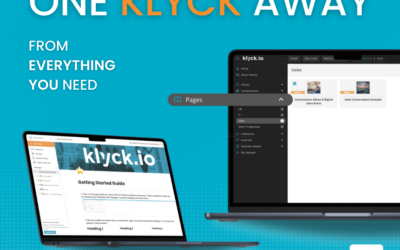
Elevating Sales Efficiency: Introducing the Powerful Integration of Klyck App + Pages
Klyck.io Blog Articles, news, tips, tricks and trends Elevating Sales Efficiency: Integrating Klyck App + Pages At Klyck, we are excited to introduce our groundbreaking integration between our two products, Klyck App and Pages, seamlessly combining content...
SharePoint vs. Sales Enablement Tools
Klyck.io Blog Articles, news, tips, tricks and trendsSharePoint vs. Sales Enablement Tools I’m just going to put this out there – and it won’t be the last time in this blog that I do – SharePoint is not the same as sales enablement. SharePoint is great at what it...
A Simplified Guide to Sales Enablement
Klyck.io Blog Articles, news, tips, tricks and trendsA Simplified Guide to Sales Enablement Wondering what sales enablement is? Consider this article the Cliff’s Notes version. Together, we’ll go through the details of what makes it work, how develop a strategy, and...
Sales Engagement vs. Sales Enablement: What’s the Difference?
Klyck.io Blog Articles, news, tips, tricks and trendsSales Engagement vs. Sales Enablement: What’s the Difference? I don’t think we need much more of an introduction for what we’re talking about today than the article title, so let’s just jump right in. What do you...

How to Unlock Marketing Analytics Across Your Sales Funnel
Klyck.io Blog Articles, news, tips, tricks and trendsHow to Unlock Marketing Analytics Across Your Sales Funnel We’ve been told time and time again that marketing data analytics are essential for effective content marketing. While most acknowledge its importance, many...
Actionable tips, tricks and trends