
Industry Insights
OpenText Migration Guide: Moving Documents, Workflows, and Metadata Safely
Published on May 13th, 2026

Migrating away from OpenText Content Suite or Extended ECM is rarely just a document transfer project.
Most organizations rely on OpenText for:
- Document lifecycle management
- Approval workflows
- Compliance policies
- Integrations with other systems
A successful migration must address workflows, metadata, permissions, and governance structures, not just file storage.
This guide outlines a structured approach to migrating from OpenText while minimizing operational risk.
Step 1: Audit Your OpenText Environment
Before migrating, inventory how OpenText is currently used.
Identify:
- Repositories and workspaces
- Document libraries
- Metadata fields
- Retention policies
- Document lifecycle states
Also document any integrations with:
- ERP systems
- CRM platforms
- Email or capture systems
This audit determines the complexity of the migration.
Step 2: Map Metadata and Document Structure
Metadata is often more important than documents themselves.
Poor metadata mapping can cause:
- Search failures
- Compliance issues
- Broken workflows
Ensure that each OpenText field maps clearly to the new system.
Typical metadata includes:
- Document type
- Department
- Owner
- Approval status
- Retention category
Step 3: Rebuild Workflows in the New Platform
Workflows usually represent the most complex part of an OpenText migration.
Examples include:
- Approval routing
- Escalation rules
- Document lifecycle transitions
- Automated notifications
Rather than copying every workflow exactly, use the migration to simplify overly complex processes.
Step 4: Plan Phased Content Migration
Large ECM migrations should happen in waves.
Common strategies include:
- Department-based migration
- Archive vs active content
- Workflow-based migration
This reduces operational disruption and allows testing between phases.
Step 5: Validate Security and Compliance
Before cutover, verify:
- Permissions and roles
- Audit logging
- Retention policies
- Document integrity
Compliance validation is critical for regulated industries.
Step 6: Train Users and Transition Operations
The migration is not complete until teams adopt the new platform.
Provide:
- Workflow training
- Updated documentation
- Process guides
Remove legacy approval paths that bypass the system.
Conclusion
Migrating from OpenText is an opportunity to simplify document workflows and reduce administrative overhead.
Organizations that plan carefully, especially around workflows and metadata, can transition smoothly to modern document management platforms.
Related Operational Insights

Email Is Quietly Ruining Your Most Critical Business Processes
If approvals, engineering changes, or policy updates are still moving through email threads, you don’t have a communication tool problem, you have a workflow problem. See why email quietly becomes the default system for critical business processes, and what a real system of record looks like instead.
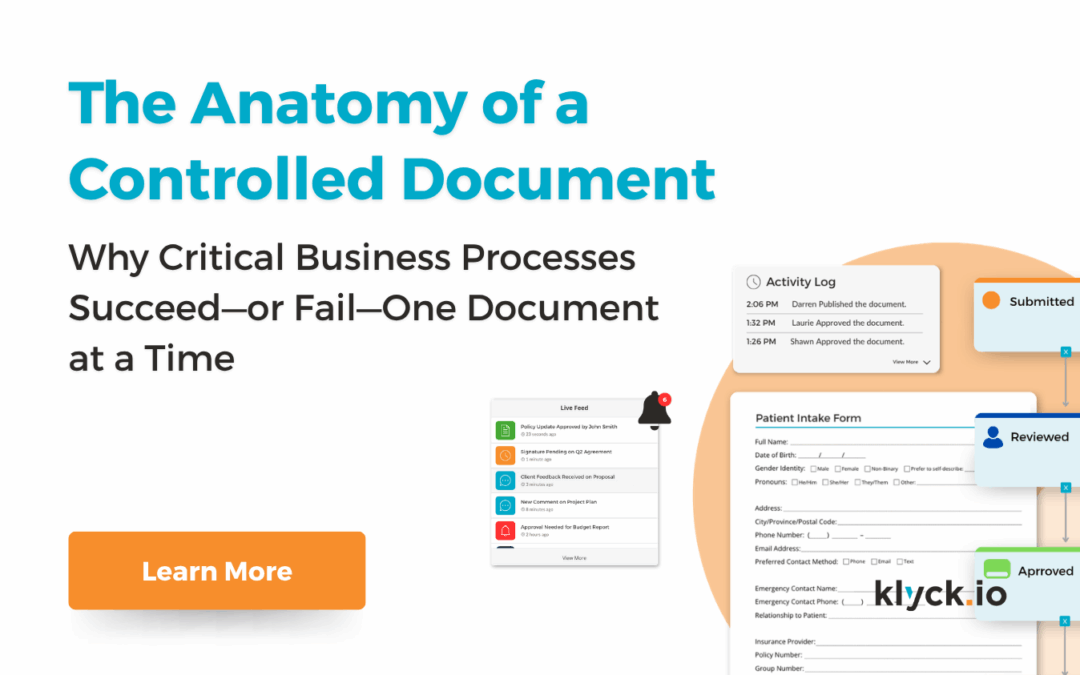
The Anatomy of a Controlled Document
Most organizations don’t have a document problem, they have a control problem. See what actually separates a controlled document from one that’s just stored, and why ownership, version history, and approvals matter more than where a file lives.
Engineering Change Request Workflow: A Complete Guide
Most ECR delays aren’t an engineering problem, they’re a visibility problem. See how manufacturers replace email approvals and spreadsheet tracking with a controlled engineering change workflow that keeps drawings, approvals, and teams in sync.
Why SharePoint Struggles with Controlled Document Workflows
SharePoint is great for storing files, but storing and controlling aren’t the same thing. See why manufacturing, quality, and operations teams keep hitting the same wall with approvals, version control, and audit visibility, and what a real workflow system looks like instead.
Worldox End-of-Life: What Teams Should Look for in a Replacement
With Worldox support ending, many organizations are asking what comes next. The answer isn’t just a new place to store files, it’s a better way to manage how documents move through your business.
Looking at Worldox replacement options?
See how modern document workflows can improve approvals, visibility, and document control across your organization.