
Industry Insights
Your ERP Runs the Transactions. Who Runs the Work Between Them?
Some of the biggest operational gaps in manufacturing exist between systems, departments, documents, and people.
Published on September 30th, 2026
Manufacturers have invested heavily in technology.
Enterprise resource planning (ERP) systems manage orders, inventory, purchasing, and financial transactions. Manufacturing execution system (MES) platforms manage production. Quality management systems (QMS) manage quality events. Customer relationship management (CRM) systems manage customers. Each system has an important job, and most manufacturers couldn’t operate without them. But ask a different set of questions.
Has Quality reviewed the engineering change? Who still needs to approve it? Has the drawing been updated? Did Production receive the new version? Is Purchasing waiting for something from Engineering? What documentation is still missing?
Suddenly, the answers can become much harder to find. That’s because some of the most important operational work in a manufacturing company doesn’t happen inside a single system.
It happens between them.
The Gap Between Systems
Consider something as common as an engineering change.
The request may originate in Engineering, but Engineering isn’t the only department involved. Quality may need to assess the impact. Operations needs to understand what changes on the floor. Purchasing may need to communicate with a supplier. Drawings, specifications, and work instructions may need to be revised. Eventually, someone has to approve the change, the new documents have to be released, and Production needs to know when to start working from the new information.
There may be excellent systems supporting every department involved. The problem is that none of them necessarily manages the entire process.
That’s when email enters the picture.
Someone sends the request to Quality. Quality replies with a question. Engineering updates an attachment. Purchasing forwards it to a supplier. Someone updates a spreadsheet. A manager approves the change in an email. The outstanding items get discussed at the next meeting. Nothing about this seems particularly alarming.
In fact, it can work surprisingly well. Until it doesn’t.
Your Systems Know What Happened. Your People Know What Is Happening.
That’s an important distinction.
An ERP is very good at recording transactions. It knows when a purchase order was created, when inventory was received, when an invoice was posted, or when a work order was completed. But many operational processes aren’t simply transactions; they’re a series of reviews, documents, decisions, approvals, tasks, and handoffs that happen over time. Because that work often crosses multiple systems and departments, the actual status of the process frequently lives in people’s inboxes, spreadsheets, meetings, and heads.
That’s where visibility starts to disappear.
A manager can look at the ERP and see the transaction, but they may still need to email three people to understand what’s actually happening.
Listen to How People Describe Their Work
One of the easiest ways to find these gaps is to listen to the language employees use when explaining a process:
“I emailed it to Quality.”
“I’m waiting for Engineering.”
“There’s a spreadsheet where we track those.”
“I think John has the latest version.”
“We go through the outstanding ones every Friday.”
“I’ll have to check where that stands.”
None of those statements means the organization has a bad process, but when you hear them repeatedly around the same critical workflow, they’re telling you something.
People have become the integration layer.
Employees are manually moving information between departments, reminding people what needs to happen, checking status, reconciling different versions, and making sure the next person knows it’s their turn. The process works because people keep it working.
The Handoffs Are Where Things Get Difficult
Inside individual departments, processes are often reasonably well understood. Engineering knows how Engineering works. Quality knows how Quality works. Finance knows how Finance works. The problems tend to appear at the boundaries.
Engineering hands something to Quality. Quality needs input from Operations. Operations needs Purchasing. Purchasing needs the supplier. Then information has to make its way back through the organization. Every handoff introduces another opportunity for the process to stall.
Who owns it now? What happens next? Which version are we reviewing? Has it been approved? Who needs to be notified?
The more departments involved, the harder those questions become to answer, and that is why adding another departmental system doesn’t necessarily solve the problem.
The problem isn’t always inside the systems. Sometimes it’s the work happening between them.
The Goal Isn’t to Replace Your ERP
This is where manufacturers can easily head in the wrong direction.
When a process becomes painful, the instinct can be to start looking for another large system but your ERP probably isn’t broken. Neither is your MES, QMS, CRM, or most of the other platforms you’ve invested in. They’re doing the jobs they were designed to do. The better question is:
What critical operational work is happening around those systems that nobody can easily see or control?
It could be an engineering change that crosses four departments. A drawing revision that needs to reach three facilities. A CAPA waiting for approval. An invoice sitting in someone’s inbox. A production record Quality needs during an audit.
These aren’t necessarily large processes. But they’re often important ones.
Start With One Process
You don’t need to redesign the entire organization to address this.
Start with one recurring process that requires too much manual coordination. Follow it from beginning to end.
Look at where the request starts, which departments become involved, what documents are created, who needs to review them, where approvals happen, and how everyone knows the process is complete. Then ask a few basic questions.
Can everyone see where the process stands? Is there a clear owner? Is the current document version obvious? Are approvals recorded? Can you reconstruct exactly what happened six months later?
If answering those questions requires searching through emails, opening spreadsheets, calling someone, or waiting for the next status meeting, you’ve probably found an operational gap.
Operational Truth
The hardest work to control is often the work between systems.
Manufacturers don’t necessarily need more software; they need better visibility into the work their existing systems don’t manage. That means bringing structure to the documents, approvals, tasks, decisions, and handoffs that connect one part of the organization to another.
Connect the Work
This is the problem Klyck is built to address.
Klyck helps manufacturers turn processes that rely on email, spreadsheets, shared folders, documents, and manual follow-up into structured workflows with clear ownership, approvals, controlled documents, and complete history. It doesn’t require replacing the systems you already depend on. ERP can continue running transactions. MES can continue managing production. QMS can continue managing quality.
Klyck helps control the operational work that moves between and around them.
Because your ERP may know the transaction, but somebody still has to run everything that happens in between.
Related Operational
Insights
How to Replace Laserfiche: A Practical Guide for Modern ECM Teams
Klyck.io Blog Articles, news, tips, tricks and trendsHow to Replace Laserfiche: A Practical Guide for Modern ECM TeamsFor many organizations, Laserfiche has served as a long-standing enterprise content management (ECM) system. But as document workflows become more...

How PING Replaced Spreadsheets With Smarter Account Planning
Klyck.io Blog Articles, news, tips, tricks and trendsHow PING Replaced Spreadsheets With Smarter Account PlanningJanuary 26th, 2026 Company: Ping Golf Industry: Sporting Goods Website: ping.com PING needed a better way to manage account plans across teams....

How to Streamline Content Management and Workflow Automation for 2026
Klyck.io Blog Articles, news, tips, tricks and trendsHow to Streamline Content Management and Workflow Automation for 2026 December 1st, 2025 A new year is the perfect moment for teams to reset the systems that support their work. And for most organizations, the...
A Modern Laserfiche Alternative
Klyck.io Blog Articles, news, tips, tricks and trendsA Modern Laserfiche Alternative For Teams That Want Simplicity, Better Visibility, and Cloud Based Efficiency November 27th, 2025 Laserfiche has been a well known option in the enterprise content management space...
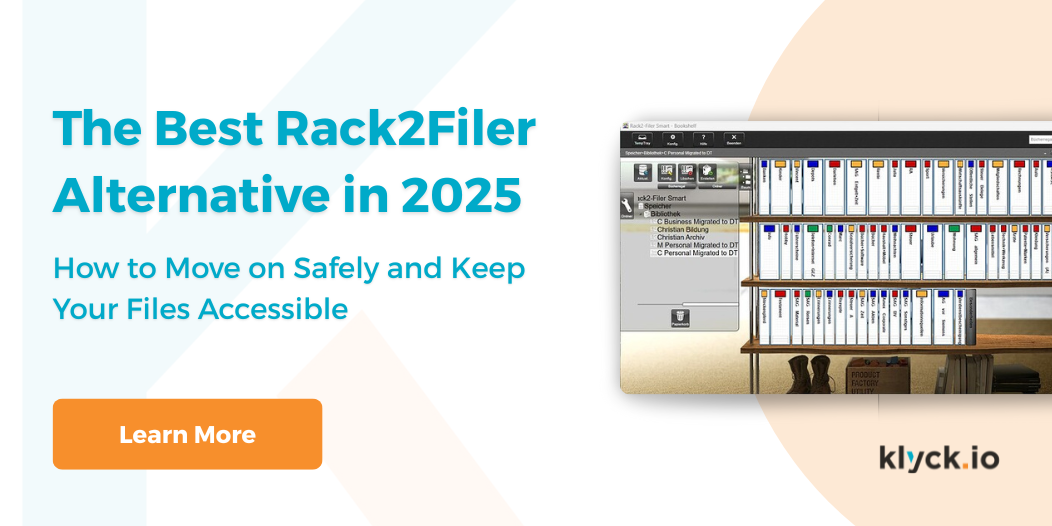
The Best Rack2Filer Alternative in 2025
Klyck.io Blog Articles, news, tips, tricks and trendsThe Best Rack2Filer Alternative in 2025 How to Move on Safely and Keep Your Files Accessible November 27th, 2025 If you are still relying on Rack2Filer, you are likely already feeling the pressure to find a new...
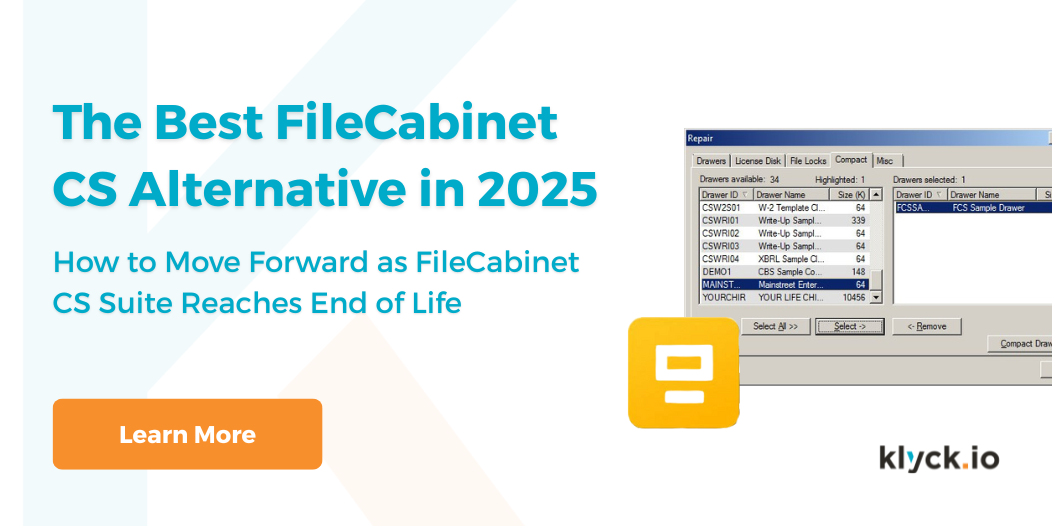
The Best FileCabinet CS Alternative in 2025
Klyck.io Blog Articles, news, tips, tricks and trendsThe Best FileCabinet CS Alternative in 2025 How to Move Forward as FileCabinet CS Suite Reaches End of Life November 27th, 2025 FileCabinet CS has been a reliable document storage solution for many years. Businesses...

Top Holiday Zoom, Teams & Slack Backgrounds for 2025
Klyck.io Blog Articles, news, tips, tricks and trendsTop Holiday Zoom, Teams & Slack Backgrounds for 2025 It’s that time of year again when our calendars fill up faster than a plate at a holiday potluck, and virtual meetings start to feel a little more… festive. A...
How Document Management Systems Help Behavioural Health Facilities Stay Compliant and Efficient
Klyck.io Blog Articles, news, tips, tricks and trendsHow Document Management Systems Help Behavioural Health Facilities Stay Compliant and Efficient August 14th, 2025 Behavioural health facilities across North America, from inpatient psychiatric hospitals to...
How Behavioral Health Teams Can Simplify Compliance, Documentation, and Collaboration
Klyck.io Blog Articles, news, tips, tricks and trendsHow Behavioural Health Teams Can Simplify Compliance, Documentation, and Collaboration August 14th, 2025 Running a behavioural health organization is challenging enough without having to chase down missing files,...